- May 8, 2025
Maintaining a #67 Low Water Cutoff
- Ray Wohlfarth
- Brewery steam systems, Steam systems
- 0 comments
This safety control has only one job, interrupt power to the burner if the water level drops below the setting. When installed on a residential boiler, this control is usually an automatic reset and used as the only low water cutoff. On commercial boilers, this safety control is typically used as an auxiliary low water cutoff and installed slightly lower than the primary low water cutoff. Many of these will have a reset button on the small box where the electric is routed. The low water cutoff is the leading mechanical cause of boiler accidents.
The #67 internal electrical contacts are rated for 7.4 amps for 120 VAC and 3.7 amps for 240 VAC. If the amperage is higher than the above limits, you will need to use a separate relay which can handle the higher rating.
The discharge pipe from the bottom of the low water cutoff should be piped to a safe location so the blowdown water will not burn the person testing or splash water on the electrical components. The water could quickly short a gas valve. The discharge pipe should maintain the same diameter and ver be reduced.
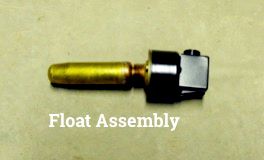
The #67 low water cutoff control is usually where the gauge glass is mounted on the boiler. The gauge glass is a vertical glass tube that visually displays the water level inside the boiler. Inside the #67 is a brass float which will rise and fall according to the water level elevations. If this control is used as an auxiliary low water cutoff, it may require the reset button be pushed if the water level drops too far. If this is regularly occurring, you need to investigate the cause. Some of the common reasons for this tripping are:
Dirty water inside the boiler is causing priming and bouncing of the water.
Quick opening steam valves causing a surge
Overfiring the burner
Primary pump control / low water cutoff could be malfunctioning
Maintenance
The manufacturer has the following maintenance suggestions:
Blowdown at least once a week when the boiler is operating
Disassemble and inspect annually. Replace the low water cutoff if it is worn, corroded, or if components no longer operate correctly.
Inspect the float chamber and equalizing piping annually. Remove all sediment and debris.
Replace control every ten years. You may need to replace it more often when severe conditions such as rapid switch cycling, surging water levels, and or improper application of water treatment chemicals.
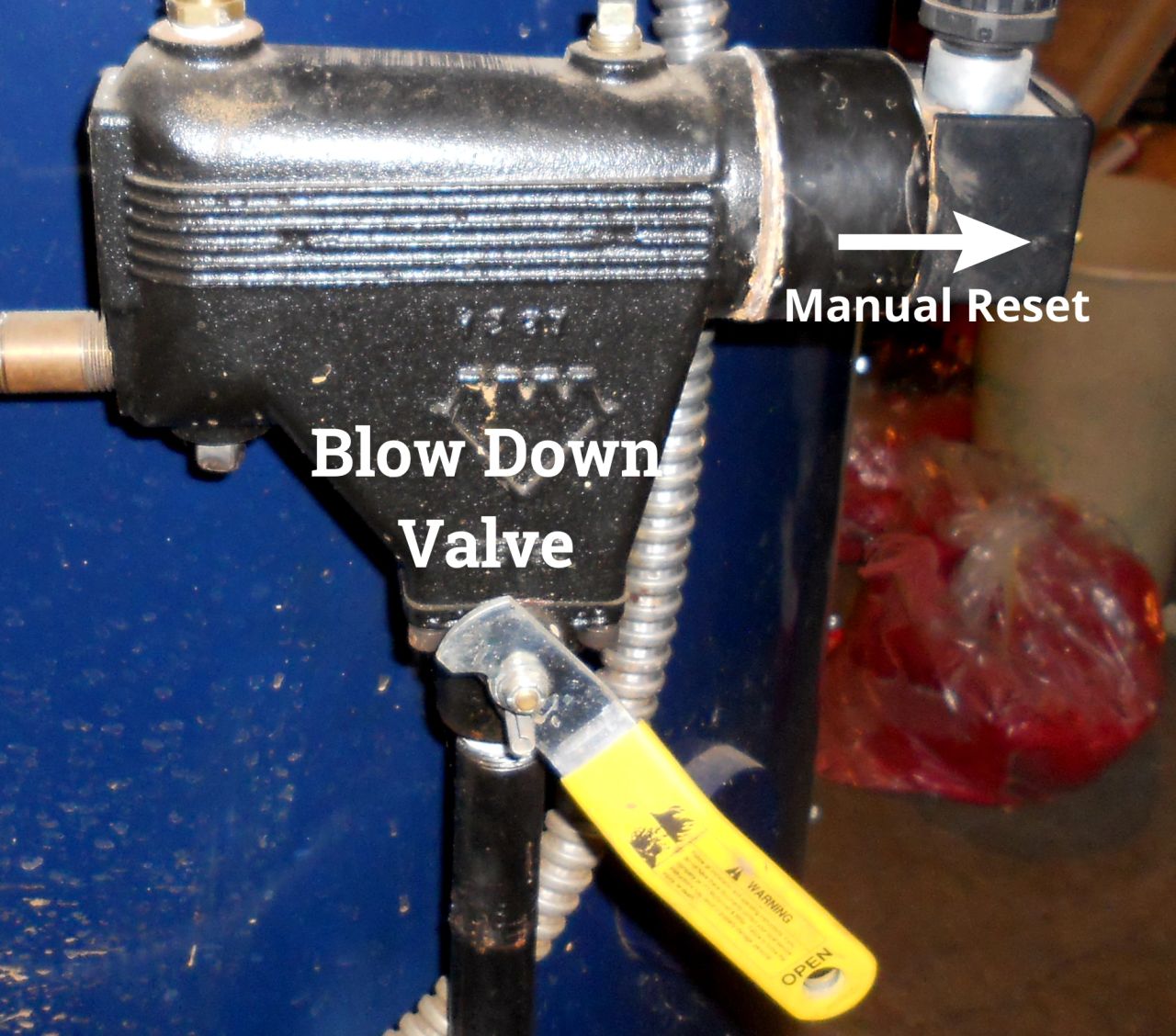
Blowdown
The blowdown directions are slightly different for this control than the #150 pump control/low water cutoff. The manufacturer suggests:
Blow down the low water cut off when the water levels are at its normal level, and the burner is on. Fully open the blowdown valve and observe the water level in the gauge glass. Close the valve after verifying that the feeder contacts have closed and the burner shuts off. If this does not happen, immediately shut off the boiler and correct the problem.
Slow Drain Test
Some boiler insurance companies suggest a slow drain test as it simulates more realistic operating conditions. I like to perform this test yearly. To complete the slow drain test for this control, I will do the following:
Shut off the power to the boiler feed pumps.
Place a set of electrical jumpers across the low water cutoff contacts on the primary control to keep the burner operating.
Open the boiler drain and slowly drain water from the boiler while the burner is operating.
Monitor the water level inside the gauge glass. If the water level drops below the shut off elevation of the #67 and the burner is still operation, I will shut off the burner and diagnose the problem. Once the issue is resolved, I remove the electrical jumpers and start the burner. I will test the controls once more by opening the blowdown valves and verifying the burner shuts off.